
Articles / Importing / 18 Oct 2026 / 6 min read
DDP shipping from China: why customs documents aren't in your name
Most DDP shipments from China are cleared by the forwarder as importer of record, often consolidated with other buyers' cargo, so there is no customs declaration or MRN in your company's name. Here is why that happens, what it blocks, and what to ask before you book.
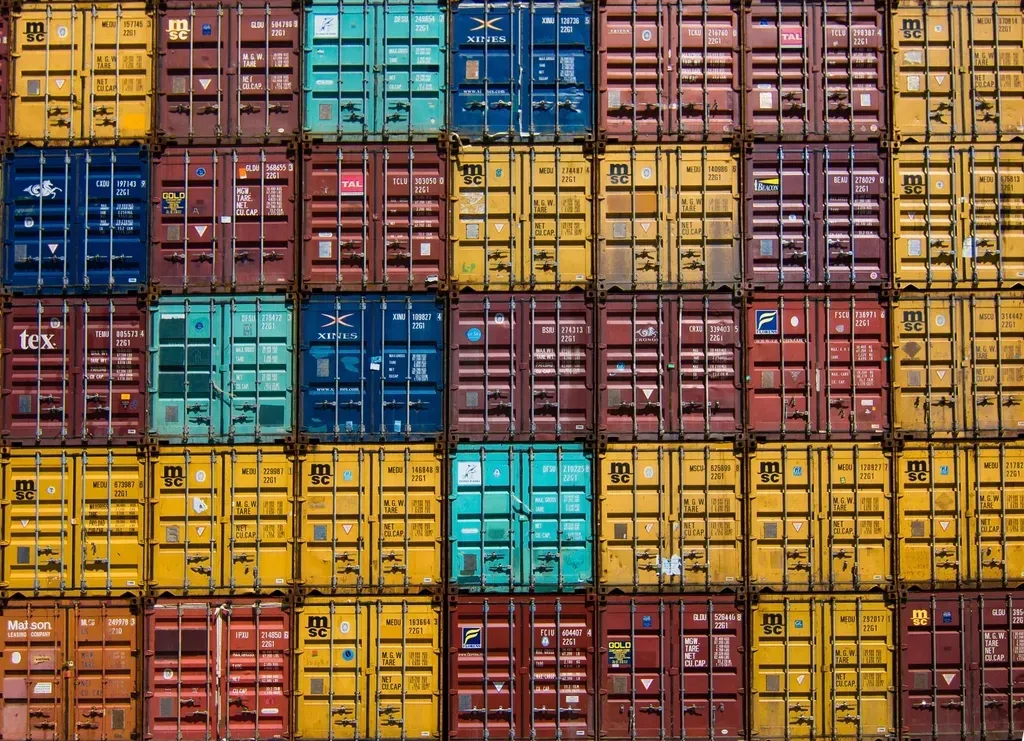
DDP sounds like the easy option: one price, goods arrive at your door, customs already handled. The problem starts when you ask for the paperwork. In most DDP shipments from China, the freight forwarder is the importer of record, not you. The customs entry is filed in the forwarder's name, often for a container holding several buyers' goods. There is no declaration and no MRN with your company name on it, because none was ever created.
That is fine if you only need the goods. It becomes a problem the moment you need to prove you imported them legally, reclaim import VAT, or satisfy a marketplace.
What DDP actually means
Under DDP (Delivered Duty Paid), the seller is responsible for getting the goods to your address with import clearance and duties paid. It is the only Incoterm where the seller clears the goods for import.
In China-to-Europe and China-to-US trade, "DDP" is also used loosely. A forwarder quotes a door price that includes shipping, duty and often VAT, and handles everything in between. You pay one invoice and wait.
What you usually receive at the end:
- a commercial invoice and packing list
- a delivery note or proof of delivery
- sometimes a screenshot or a redacted copy of a customs document
What you usually do not receive:
- an import declaration showing your company as the importer
- an MRN (the reference number customs assigns to a declaration) for your goods
- a document showing your VAT or EORI number as the importer

Why the documents aren't in your name
Three things cause this, and they are structural, not personal.
The forwarder is the importer of record. To clear goods, someone needs an importer registration in the destination country. A forwarder clearing DDP cargo uses its own, or a partner company's. The declaration therefore carries their name and their VAT or EORI number, not yours. In the EU, reclaiming import VAT generally requires being the importer of record on the declaration.
Your cargo is consolidated. Forwarders don't file one declaration per buyer. They file one per master bill or per container, listing every buyer's cartons as separate lines. One container can hold twenty small importers' goods under a single entry. Your shipment isn't a declaration; it's a line on someone else's.
The declaration contains other buyers' data. A full copy would show other companies' names, goods, values and HS codes. That's why forwarders refuse to hand it over, and why "just redact it" often isn't practical — the declaration is one document with one reference number, and a partial copy is not much use to a tax office.
Many first-time buyers assume the forwarder is being difficult. Usually they simply can't produce a document that doesn't exist.
What breaks without a declaration in your name
- Import VAT. If you're VAT-registered and want to reclaim import VAT, you normally need a declaration naming you as importer, with your VAT number. A forwarder's invoice saying "duty and VAT included" is a cost line, not your deductible import VAT.
- Marketplace compliance. Platforms increasingly ask sellers for invoices and import documents when reviewing accounts, and business customers ask for proof of lawful import. A delivery note is not that.
- Your books. Without a customs entry you can't show an auditor what was declared, at what value, under which HS code.
- Checking the declaration. If you never see it, you never confirm the HS code or the declared value. Under-declaration is the declarant's problem legally, but it's your container that gets held.
- Product compliance. For goods with safety rules, the importer is often the party responsible for compliance. If the forwarder is the importer of record, you have no document showing you placed the goods on the market.
None of this matters for a sample run you're reselling casually. It matters a lot once you're VAT-registered, selling on a platform, or selling to business customers.
Questions to ask before you accept a DDP quote
Ask these in writing, before you pay, and keep the answers:
- Who will be the importer of record on the customs declaration?
- Will the declaration be filed under my company name and my VAT or EORI number, or yours?
- Will my goods be consolidated with other customers' cargo under one declaration? If yes, can my lines be separated?
- Can you send me the import declaration and the MRN that cover my goods? What will be redacted?
- Can you declare my shipment separately? What changes if you do — clearance point, timing, who pays the duty?
- Which HS codes and which declared value will be used? Can I approve them in writing before filing?
- How will import VAT appear, and on which document?
- Which documents will I hold after clearance, and when will I get them?
If the answers are vague, treat that as the answer. A forwarder who does this regularly will reply in specifics; one who resells space on someone else's entry won't.
Your options if you need the documents
DDP with you as importer of record. Some forwarders will clear in your name while still handling transport end to end. You supply your EORI or VAT number and a power of attorney, and they file the entry for you. Ask for this explicitly — it is a different service from standard DDP, and not every forwarder offers it.
Switch to DAP. Under DAP (Delivered at Place), the seller delivers to an agreed point and you handle import clearance. You appoint a customs broker, pay duty and VAT yourself, and the declaration and MRN come back in your name. More work, and you need duty and VAT cash available at the border, but the paperwork is yours.
Split by order type. Plenty of buyers run small test orders DDP because the paperwork doesn't matter yet, and move to DAP once volumes justify a broker. That's a reasonable line to draw, as long as you draw it before the order, not after.
Check the courier route too. Small parcels sent by express are usually cleared by the courier, often under its own simplified procedure, so ask what you will receive afterwards. Some countries let you register to clear your own courier shipments; ask before you rely on it.
Whichever route you take, decide before the goods leave China. Once a container is cleared under someone else's entry, there is no way to reissue that declaration in your name afterwards.
For the full list of paperwork an import normally involves, see documents needed to import from China. If you're still weighing shipping methods for a small first order, this piece on small-order shipping covers where the money goes.
Quick answers
Is DDP always the wrong choice?
No. DDP is fine when you don't need import documents in your name — samples, low-value test orders, or goods you aren't reclaiming VAT on. It becomes the wrong choice when a tax authority, a marketplace or a business customer will ask you to prove the import.
Can I get an MRN for my shipment if it was consolidated?
Usually not. An MRN belongs to one customs declaration, and that declaration covers the whole consolidated entry, not your cartons. The only way to hold an MRN for your goods is for your goods to be declared on their own entry.
Does DAP mean I need my own customs broker?
In practice, yes. You need someone to file the import declaration in your country, and that is normally a licensed customs broker. Ask the forwarder whether they can act as your broker under DAP, or whether you need to appoint one.
What to do next
If you're about to book a DDP shipment and you're not sure who will appear as importer, send us the product and tell us the destination country. We arrange the forwarder for our buyers, so these questions can be put to the forwarder before booking, while the answer can still change the plan. You can also read more about how we work.